 LNEYA Chiller

types of water chiller
Introduction to Water Chillers
Water chillers are refrigeration systems designed to cool water, which is then circulated to absorb heat from spaces, equipment, or processes. They play a critical role in maintaining optimal temperatures in environments like data centers, manufacturing plants, hospitals, and commercial buildings. The diversity of water chiller types stems from the need to adapt to varying cooling demands, energy sources, and installation constraints. Understanding the different types is essential for choosing the right system, as each is engineered to perform best under specific conditions, influencing factors such as energy efficiency, upfront costs, and maintenance needs.
Classification by Refrigeration Method
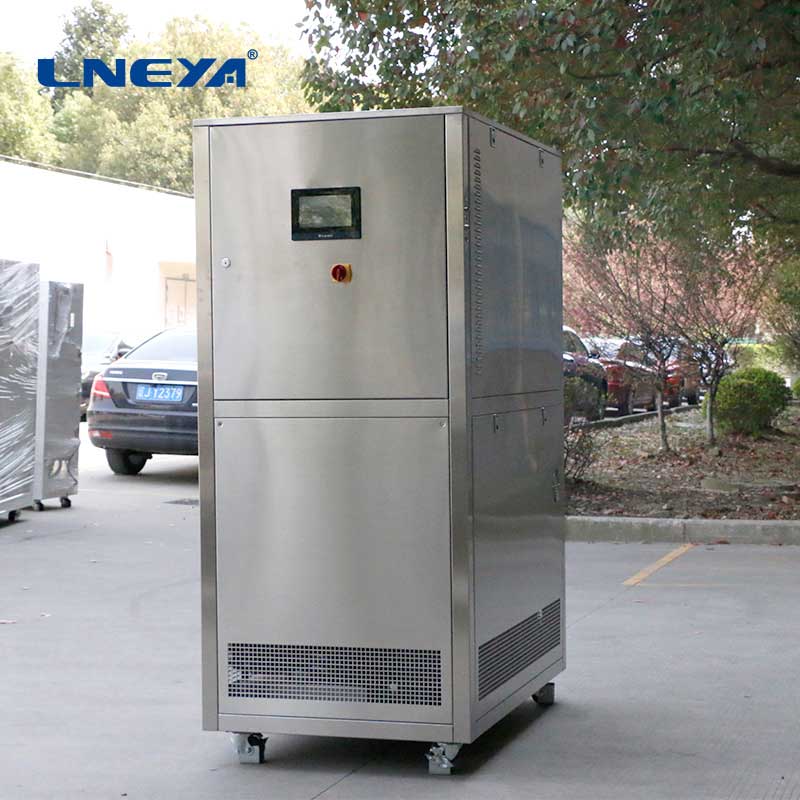
One of the most common ways to categorize water chillers is by their refrigeration method, which determines how they remove heat from the chilled water. This classification yields three main types: air-cooled, water-cooled, and absorption water chillers.
Air-Cooled Water Chillers
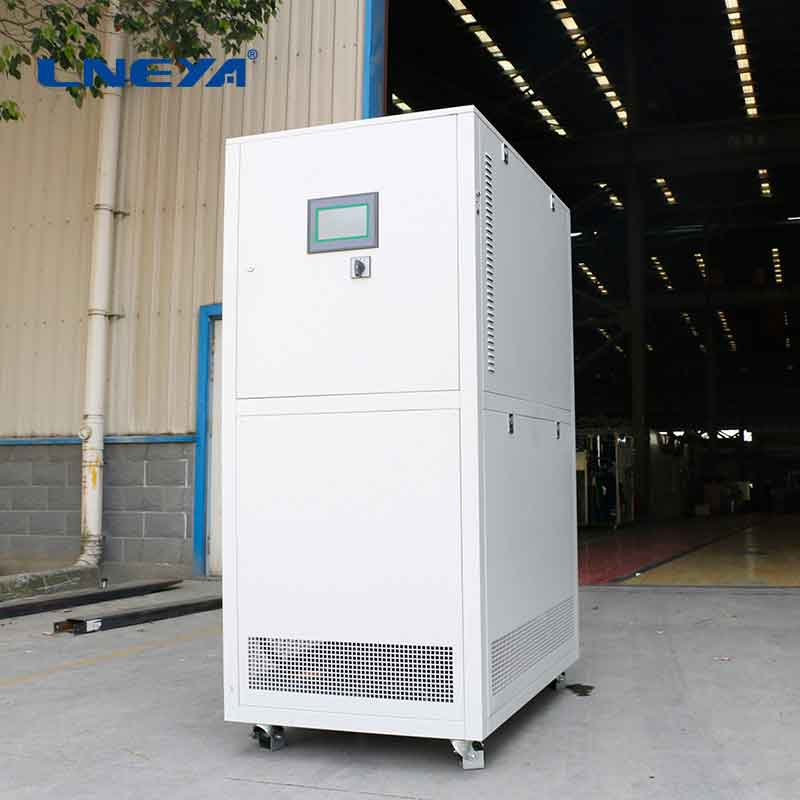
Air-cooled water chillers rely on ambient air to dissipate the heat absorbed from the chilled water. Their design includes a condenser coil with fans that blow air over the coil, transferring heat from the refrigerant (circulating within the coil) to the surrounding air.
Working Principle
The refrigeration cycle in an air-cooled chiller begins when the evaporator cools the water (lowering its temperature to the desired level). The refrigerant, which absorbs heat from the water, turns into a low-pressure gas and moves to the compressor. The compressor pressurizes the refrigerant, raising its temperature and pressure, then sends it to the condenser coil. Fans blow ambient air over the coil, cooling the refrigerant and converting it back into a liquid. The liquid refrigerant then flows through an expansion valve, reducing its pressure and temperature, before returning to the evaporator to repeat the cycle.
Advantages
Easy Installation: They do not require a cooling tower or additional water piping, making them simpler to install, especially in areas where water access is limited or space is constrained.
Lower Upfront Costs: Without the need for cooling tower components, their initial purchase and installation costs are generally lower than water-cooled chillers.
Minimal Water Usage: Since they use air for heat dissipation, they consume little to no water, making them suitable for regions with water scarcity.
Disadvantages
Lower Energy Efficiency: Ambient air temperature affects performance; in hot or humid climates, the air is less effective at absorbing heat, forcing the compressor to work harder and increasing energy consumption.
Noisier Operation: The fans used to blow air over the condenser coil generate noise, which can be a concern in noise-sensitive areas like residential neighborhoods or offices.
Space Requirements for Airflow: They need adequate clearance around the condenser to ensure proper airflow; blocked airflow reduces efficiency and can lead to overheating.
Ideal Applications
Small to medium-sized commercial buildings (e.g., offices, retail stores) where cooling demands are moderate.
Temporary cooling setups (e.g., construction sites, event venues) due to easy installation.
Regions with cool or dry climates, where ambient air efficiently dissipates heat.
Areas with water restrictions, as they minimize water usage.
Water-Cooled Water Chillers
Water-cooled water chillers use water (from a cooling tower or a natural water source like a lake or river) to remove heat from the refrigerant. They are known for high energy efficiency, making them a preferred choice for large-scale cooling applications.
Working Principle
Similar to air-cooled chillers, the evaporator in a water-cooled chiller cools the process water. The refrigerant, now a low-pressure gas, is compressed and sent to the condenser. However, instead of air, the condenser uses cooling water (from a cooling tower) to absorb heat from the refrigerant. The cooling water circulates through the condenser, picks up heat from the refrigerant (converting the refrigerant to a liquid), and then flows back to the cooling tower. At the cooling tower, the warm water is sprayed into the air, and evaporation cools it down before it returns to the chiller’s condenser.
Advantages
High Energy Efficiency: Water has a higher heat capacity than air, allowing the condenser to dissipate heat more effectively. This reduces the compressor’s workload, leading to lower energy consumption and a higher coefficient of performance (COP) compared to air-cooled models.
Stable Performance in Extreme Climates: Unlike air-cooled chillers, their performance is not heavily affected by high ambient temperatures or humidity. The cooling tower maintains a consistent cooling water temperature, ensuring reliable operation even in hot summers.
Quieter Operation: They lack the large condenser fans of air-cooled chillers; the main noise sources (compressor and pumps) can be enclosed in mechanical rooms, making them suitable for noise-sensitive areas.
Disadvantages
Higher Upfront and Installation Costs: They require a cooling tower, water pumps, and additional piping, increasing initial purchase and installation expenses.
Water Dependence: They need a continuous supply of water for the cooling tower, which can be a problem in water-scarce regions. Additionally, the cooling tower requires regular maintenance to prevent scale buildup and algae growth.
Larger Footprint: The cooling tower and associated piping take up additional space, making them less suitable for areas with limited land or rooftop space.
Ideal Applications
Large commercial buildings (e.g., malls, hotels, hospitals) with high cooling loads.
Industrial facilities (e.g., manufacturing plants, power stations) that require consistent, efficient cooling for machinery and processes.
Data centers, where stable temperatures are critical for equipment performance and reliability.
Regions with high temperatures or humidity, where air-cooled chillers would struggle to maintain efficiency.
Absorption Water Chillers
Absorption water chillers differ from the above types as they use heat (instead of electricity) to drive the refrigeration cycle. They are ideal for applications where waste heat or low-cost heat sources (e.g., natural gas, solar energy) are available.
Working Principle
Absorption chillers use a refrigerant-absorbent pair (commonly water and lithium bromide, or ammonia and water). The process starts with the evaporator, where the refrigerant (water, in the case of lithium bromide systems) evaporates at low pressure, absorbing heat from the chilled water and cooling it. The refrigerant vapor is then absorbed by the absorbent (lithium bromide), forming a solution. This solution is pumped to a generator, where heat is applied (from a source like natural gas or steam). The heat causes the refrigerant vapor to separate from the absorbent. The refrigerant vapor moves to the condenser, where it is cooled (by water or air) and condenses back into a liquid. The liquid refrigerant flows through an expansion valve to the evaporator, while the absorbent returns to the absorber to repeat the cycle.
Advantages
Low Electricity Consumption: Since they use heat instead of electricity to power the cycle, they reduce reliance on the electrical grid, making them cost-effective in areas with high electricity prices.
Eco-Friendly Options: When paired with renewable heat sources (e.g., solar thermal energy) or waste heat (from industrial processes), they have a lower carbon footprint compared to electric-powered chillers.
Quiet Operation: They have no moving parts like compressors, resulting in very low noise levels, making them ideal for quiet environments such as libraries or laboratories.
Disadvantages
Dependence on Heat Sources: Their performance depends on a consistent supply of heat. Without a reliable heat source, they cannot operate effectively.
Lower Cooling Capacity at Low Temperatures: They are less efficient at producing very cold chilled water (below 40°F/4°C), limiting their use in applications requiring low temperatures.
Higher Maintenance for Corrosion Prevention: The lithium bromide solution is corrosive, so the system requires regular checks and the addition of corrosion inhibitors to prevent damage to components.
Slower Response to Load Changes: They take longer to adjust to changes in cooling demand compared to electric chillers, making them less suitable for applications with rapidly fluctuating loads.
Ideal Applications
Industrial facilities with waste heat (e.g., factories, refineries) that can be repurposed to power the chiller.
Buildings using natural gas or district heating systems, where heat is readily available at low cost.
Solar-powered cooling systems, paired with solar thermal collectors to provide the necessary heat.
Areas with frequent power outages, as they can operate with alternative heat sources (e.g., natural gas generators) when electricity is unavailable.
Classification by Compressor Type
Compressors are the “heart” of electric-powered water chillers (air-cooled and water-cooled), and their design significantly impacts the chiller’s capacity, efficiency, and application. This classification includes scroll, screw, reciprocating, and centrifugal water chillers.
Scroll Water Chillers
Scroll chillers use a scroll compressor, which consists of two spiral-shaped scrolls (one fixed, one orbiting). The orbiting scroll moves around the fixed scroll, creating pockets of refrigerant that compress and move the refrigerant through the system.
Working Principle
The low-pressure refrigerant gas enters the outer pockets of the scrolls. As the orbiting scroll moves, the pockets shrink, compressing the refrigerant and increasing its pressure and temperature. The compressed gas is pushed to the center of the scrolls and then sent to the condenser. After condensing into a liquid, the refrigerant flows through the expansion valve and into the evaporator, where it absorbs heat and turns back into a gas, returning to the scroll compressor.
Advantages
High Energy Efficiency: Scroll compressors have fewer moving parts, reducing friction and energy loss. They also operate with a continuous compression process (unlike reciprocating compressors, which have intermittent compression), leading to smoother operation and higher efficiency, especially at partial loads.
Quiet and Vibration-Free: The simple scroll design produces minimal noise and vibration, making them suitable for noise-sensitive areas like offices or residential buildings.
Compact Size: Scroll compressors are smaller and lighter than screw or centrifugal compressors, resulting in a more compact chiller unit, which saves space.
Reliable Operation: Fewer moving parts mean fewer points of failure, leading to longer service life and lower maintenance requirements.
Disadvantages
Limited Cooling Capacity: They are typically designed for small to medium cooling capacities (up to around 200 tons). For larger cooling loads, multiple scroll compressors may be needed, increasing complexity and cost.
Less Efficient at High Temperatures: In extremely high ambient temperatures, their efficiency can decrease, as the compressor struggles to maintain optimal compression.
Ideal Applications
Small to medium commercial buildings (e.g., small offices, restaurants, schools) with cooling loads between 5 and 200 tons.
Residential cooling systems (e.g., high-end homes with central cooling needs).
Process cooling in small manufacturing operations (e.g., food processing, plastic molding) with moderate cooling demands.
Screw Water Chillers
Screw chillers use a screw compressor, which features two interlocking helical rotors (male and female). As the rotors rotate, they trap and compress the refrigerant gas.
Working Principle
Low-pressure refrigerant gas enters the inlet of the screw compressor, where it is trapped between the rotors’ threads. As the rotors turn, the threads move the gas toward the outlet, reducing the volume and increasing the pressure and temperature of the refrigerant. The compressed gas exits the compressor and flows to the condenser, where it condenses into a liquid. The liquid refrigerant passes through the expansion valve, cools down, and enters the evaporator to absorb heat, turning back into a gas and returning to the compressor.
Advantages
High Cooling Capacity: Screw compressors are suitable for medium to large cooling capacities (from 50 to 1,000 tons), making them ideal for larger buildings and industrial applications.
Efficient at Partial Loads: Many screw chillers use variable-speed drives (VSD) for the compressor, allowing them to adjust their output based on cooling demand. This results in high efficiency even when operating at partial loads (a common scenario in most buildings).
Durable Design: The rotors in screw compressors are robust and have a long service life, with minimal wear and tear. This reduces maintenance frequency and costs.
Stable Performance: They operate smoothly with consistent compression, ensuring stable chilled water temperatures even with minor fluctuations in load.
Disadvantages
Higher Noise Levels Than Scroll Chillers: While quieter than reciprocating compressors, screw compressors generate more noise than scroll models, requiring sound insulation in noise-sensitive areas.
Larger Footprint: The screw compressor is larger than the scroll compressor, so screw chillers take up more space than scroll chillers of similar capacity.
Higher Upfront Costs: Their larger size and more complex design lead to higher initial purchase costs compared to scroll chillers.
Ideal Applications
Medium to large commercial buildings (e.g., shopping malls, hotels, universities) with cooling loads between 50 and 1,000 tons.
Industrial processes (e.g., chemical manufacturing, metal processing) that require consistent cooling for machinery.
District cooling systems, which supply chilled water to multiple buildings in a specific area.
Reciprocating Water Chillers
Reciprocating chillers (also known as piston chillers) use a reciprocating compressor, which uses a piston moving back and forth in a cylinder to compress the refrigerant. They were once widely used but have become less common in large applications due to the rise of scroll and screw compressors.
Working Principle
The reciprocating compressor’s piston moves downward, creating a vacuum that draws low-pressure refrigerant gas into the cylinder (suction stroke). The piston then moves upward, compressing the gas and increasing its pressure and temperature (compression stroke). The compressed gas is pushed out of the cylinder (discharge stroke) and sent to the condenser. After condensing into a liquid, the refrigerant flows through the expansion valve and into the evaporator, where it absorbs heat and vaporizes, returning to the compressor for the next cycle.
Advantages
Cost-Effective for Small Capacities: For small cooling loads (up to 50 tons), reciprocating chillers are often more affordable than scroll or screw models, making them a budget-friendly option.
Simple Maintenance: The design of reciprocating compressors is straightforward, with easily accessible parts, making maintenance and repairs simpler and less costly.
Proven Technology: They have been used for decades, so technicians are familiar with their operation and maintenance, ensuring reliable service.
Disadvantages
Low Energy Efficiency: The intermittent compression process (suction, compression, discharge) leads to higher energy loss compared to scroll or screw compressors. They are also less efficient at partial loads.
High Noise and Vibration: The back-and-forth movement of the piston generates significant noise and vibration, which can be disruptive in quiet environments.
Limited Capacity: They are not suitable for large cooling loads (over 50 tons) because increasing capacity requires adding multiple cylinders or compressors, which increases complexity and reduces efficiency.
Shorter Service Life: The moving piston and valves experience more wear and tear, leading to a shorter service life compared to scroll or screw compressors.
Ideal Applications
Small commercial spaces (e.g., convenience stores, small offices) with cooling loads under 50 tons.
Residential cooling systems (older homes or budget-friendly installations).
Portable cooling units (e.g., small-scale temporary cooling for events or construction sites).
Centrifugal Water Chillers
Centrifugal chillers use a centrifugal compressor (also called a turbocompressor), which uses a rotating impeller to accelerate the refrigerant gas, converting kinetic energy into pressure energy. They are designed for very large cooling capacities.
Working Principle
Low-pressure refrigerant gas enters the centrifugal compressor and is drawn into the rotating impeller. The impeller’s blades spin at high speed, accelerating the gas outward. As the gas moves away from the impeller (into the diffuser), its velocity decreases, and its pressure increases (due to the conversion of kinetic energy to pressure energy). The high-pressure gas then flows to the condenser, where it condenses into a liquid. The liquid refrigerant passes through the expansion valve, cools down, and enters the evaporator to absorb heat, turning back into a gas. The gas is then drawn back into the centrifugal compressor to repeat the cycle.
This content is copyrighted by LNEYA. If there is any infringement, please contact email: Lilia@lneya.com
The prev: industrial heater priceThe next: water cooled chiller types
Related recommendations

efficient heater
396In an era where energy conservation and cost - effectiveness are paramount, efficient heaters have become a crucial component for maintaining comfortable indoor temperatures. Whether it's for keep...
View detailsindustrial chiller singapore
458Industrial Chiller Systems in Singapore: Market Dynamics and Environmental Considerations Industrial chiller systems are essential in Singapore's manufacturing and technology hub, playing a cri...
View detailsoperation of chiller
746The Operation of Chiller Equipment Chiller equipment is an essential component in many industrial and commercial processes where temperature control is critical. These systems operate on well-e...
View detailsAdvantages of Air Cooled Chillers
1246Advantages of Air Cooled Chillers Configuration of air-cooled chillerAccording to the compressor, the air-cooled chiller can be divided into an air-cooled scroll chiller and an air-cooled sc...
View details




HelloPlease log in