 LNEYA Chiller

closed cycle cryocooler
Introduction to Closed Cycle Cryocoolers
Closed cycle cryocoolers (CCCs) are specialized thermal management systems engineered to generate and sustain temperatures far below ambient, typically ranging from 0.1 K to 120 K (-273.05 °C to -153.15 °C). Unlike open-cycle cryocoolers, which consume refrigerant (e.g., liquid nitrogen) that is vented after use, CCCs operate on a closed refrigerant loop. This loop recirculates a single refrigerant (such as helium, neon, or hydrogen) repeatedly through four core thermodynamic stages, eliminating the need for constant refrigerant replacement.
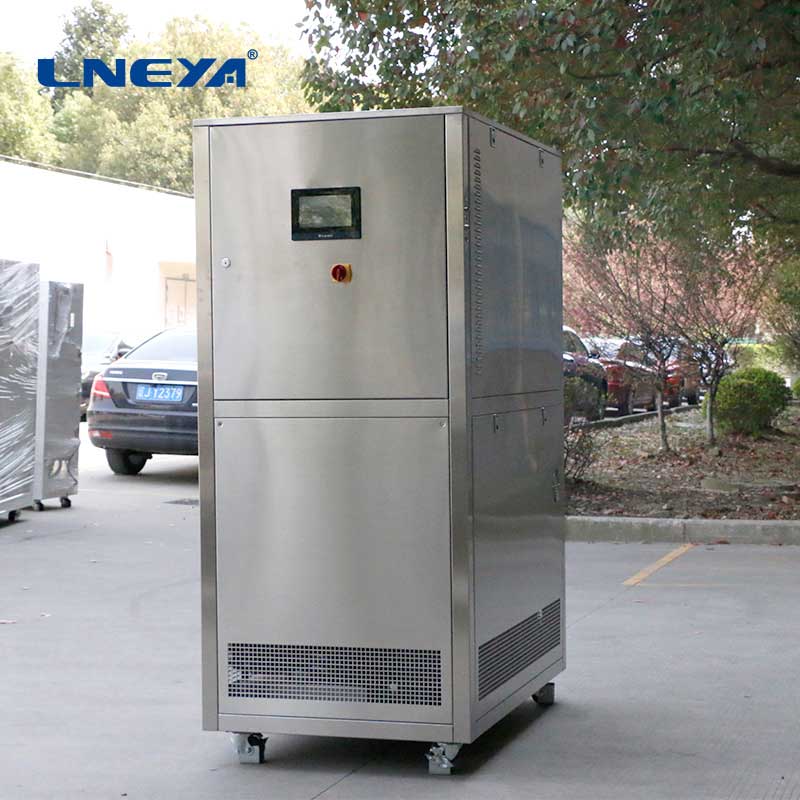
Their design makes them indispensable in applications where long-term, continuous low-temperature operation is required—especially in environments where open-cycle systems are impractical (e.g., space missions, remote sensors) or costly (e.g., industrial process cooling). CCCs balance portability, efficiency, and sustainability, making them a cornerstone technology in modern low-temperature engineering.
Core Working Principle of Closed Cycle Cryocoolers
All CCCs follow a fundamental closed-loop thermodynamic cycle, though the specific mechanisms vary by type. The cycle consists of four key stages, which work together to extract heat from a target load and dissipate it to the environment:
Compression Stage
A compressor (mechanical or electrochemical) pressurizes the refrigerant gas. This process increases the refrigerant’s temperature and pressure—energy is added to the gas, which is then sent to the next stage. For example, in Stirling cryocoolers, a piston-driven compressor compresses helium gas; in GM cryocoolers, a rotary valve controls gas compression.
Condensation/Cooling Stage
The high-pressure, high-temperature refrigerant gas flows through a heat exchanger (often called a “condenser” or “cooler”). Here, heat is transferred from the refrigerant to a cooling medium (e.g., ambient air, water, or a secondary cooling loop). The refrigerant loses heat, condenses into a liquid (for high-pressure systems like JT) or remains a supercritical fluid (for some low-temperature designs), while maintaining high pressure.
Expansion Stage
The cooled, high-pressure refrigerant is forced through a restriction (e.g., a capillary tube, expansion valve, or regenerator). This restriction causes the refrigerant to expand rapidly, dropping its pressure and temperature drastically. This is the stage where the cryogenic cooling effect is generated—temperatures plummet to the target range (e.g., 4 K for helium-based systems).
Evaporation/Absorption Stage
The low-temperature, low-pressure refrigerant flows through a cold head (the part of the cryocooler in contact with the target load). Here, it absorbs heat from the load (e.g., a sensor, superconductor, or sample), causing the refrigerant to evaporate back into a gas (or warm slightly if in a gaseous state). The now-warmed, low-pressure gas returns to the compressor, and the cycle repeats.
Major Types of Closed Cycle Cryocoolers
CCCs are classified based on their thermodynamic cycle and mechanical design. Each type has unique advantages, limitations, and ideal applications. Below are the four most common categories:
Stirling Cryocoolers
Working Principle
Stirling cryocoolers operate on the Stirling cycle, which uses two pistons (a compression piston and a displacer piston) in a closed cylinder filled with a refrigerant (usually helium). The displacer piston moves the gas between a hot end (near the compressor) and a cold end (the cold head), while the compression piston controls pressure. Heat is rejected at the hot end during compression and absorbed at the cold end during expansion.
Key Characteristics
Temperature Range: Typically 20 K to 120 K, though advanced models can reach 8 K.
Efficiency: High thermal efficiency (up to 30% of the Carnot limit) due to minimal refrigerant losses.
Speed: Fast cool-down times (often 10–30 minutes to reach target temperature).
Vibration: Generates moderate vibration from piston movement, which may require damping in sensitive applications.
Applications
Aerospace: Cooling infrared (IR) sensors in satellites and aircraft.
Medical: Cooling detectors in magnetic resonance imaging (MRI) systems and cryosurgery devices.
Industrial: Low-temperature testing of electronic components.
Gifford-McMahon (GM) Cryocoolers
Working Principle
GM cryocoolers use a reciprocating displacer piston and a rotary valve to control refrigerant flow. The cycle has two phases: (1) The valve opens to allow high-pressure helium into the cold head, pushing the displacer upward and cooling the gas via expansion; (2) The valve switches to a low-pressure line, allowing the displacer to move downward, expelling warm gas back to the compressor. A regenerator (a porous material that stores and releases heat) enhances efficiency by pre-cooling incoming gas.
Key Characteristics
Temperature Range: 4 K to 100 K; two-stage GM models can reach 1.8 K.
Reliability: Simple mechanical design (fewer moving parts than Stirling) leads to long lifespans (10,000–30,000 operating hours).
Vibration: Lower vibration than Stirling cryocoolers, making them suitable for sensitive equipment.
Efficiency: Lower efficiency than Stirling (around 10–20% of the Carnot limit) but better for ultra-low temperatures.
Applications
Quantum Computing: Cooling superconducting qubits (which require 10–20 mK temperatures, often with a GM pre-cooler).
Scientific Research: Cooling detectors in particle physics experiments (e.g., X-ray detectors).
Industrial: Cooling cryopumps for high-vacuum systems.
Pulse Tube Cryocoolers (PTCs)
Working Principle
Pulse tube cryocoolers are a variant of Stirling cryocoolers but replace the displacer piston with a pulse tube (a hollow tube) and an orifice valve. A compressor generates pressure pulses in the refrigerant (helium), which flow into the pulse tube. The orifice valve creates a phase shift between pressure and mass flow, causing heat to be rejected at the warm end of the tube and absorbed at the cold end. A regenerator further improves heat transfer.
Key Characteristics
Temperature Range: 2 K to 100 K; advanced single-stage PTCs reach 4 K, while two-stage models hit 1.5 K.
Vibration: Virtually vibration-free (no moving parts in the cold head), making them ideal for ultra-sensitive applications.
Reliability: High reliability (20,000–50,000 operating hours) due to minimal mechanical wear.
Efficiency: Comparable to Stirling cryocoolers but with lower maintenance needs.
Applications
Space Exploration: Cooling sensors in telescopes (e.g., the James Webb Space Telescope’s mid-infrared instrument).
Medical: Cooling optical components in laser-based therapies and diagnostic devices.
Quantum Technology: Cooling quantum sensors and atomic clocks.
Joule-Thomson (JT) Cryocoolers
Working Principle
JT cryocoolers rely on the Joule-Thomson effect: when a gas expands through a small orifice (throttle valve) at constant enthalpy, its temperature drops. The system uses a closed loop of high-pressure refrigerant (e.g., helium, neon, or a hydrocarbon mixture). The refrigerant is compressed, cooled by a heat exchanger, then expanded through the orifice to generate cold. A second heat exchanger pre-cools incoming high-pressure gas using the cold, low-pressure gas returning to the compressor.
Key Characteristics
Temperature Range: 8 K to 300 K; mixed-refrigerant JT models can reach 120 K with high efficiency.
Compactness: Extremely small and lightweight, making them ideal for micro-scale applications.
Vibration: No moving parts (except the compressor), resulting in low vibration.
Efficiency: High efficiency for moderate low temperatures (120–300 K) but less efficient at temperatures below 20 K.
Applications
Electronics: Cooling microchips in high-performance computing (HPC) systems to reduce heat-related performance loss.
Medical: Cooling portable diagnostic devices (e.g., hand-held IR thermometers) and drug storage units.
Automotive: Cooling batteries in electric vehicles (EVs) to maintain optimal performance in extreme temperatures.
Key Components of Closed Cycle Cryocoolers
Regardless of type, CCCs share several critical components that enable their operation:
Compressor
The compressor is the “heart” of the system, responsible for pressurizing the refrigerant. It can be:
Reciprocating: Piston-driven (used in Stirling and GM cryocoolers).
Rotary: Scroll or screw-type (used in large-scale CCCs for industrial applications).
Electrochemical: Solid-state compressors (emerging technology for micro-scale PTCs and JT cryocoolers).
Regenerator
A regenerator is a porous material (e.g., copper mesh, lead spheres, or ceramic foam) that stores heat during one phase of the cycle and releases it during another. It pre-cools incoming refrigerant, reducing the load on the cold head and improving efficiency. Regenerators are critical in Stirling, GM, and PTCs.
Cold Head
The cold head is the component that comes into direct contact with the target load. It is designed to maximize heat transfer, with a large surface area and materials with high thermal conductivity (e.g., copper, aluminum). The cold head’s temperature determines the cryocooler’s cooling capacity.
Heat Exchangers
Heat exchangers transfer heat between the refrigerant and the environment (or a secondary cooling loop). They include:
Condenser: Cools high-pressure refrigerant after compression.
Pre-cooler: Cools incoming refrigerant using cold, low-pressure gas (critical in JT cryocoolers).
Expansion Device
The expansion device (orifice valve, capillary tube, or regenerator) causes the refrigerant to expand and cool. Its design varies by cryocooler type:
Orifice Valve: Used in JT cryocoolers and PTCs.
Displacer Piston: Used in Stirling and GM cryocoolers.
Applications of Closed Cycle Cryocoolers
CCCs are used across diverse industries where ultra-low temperatures are essential. Below are their most impactful use cases:
Aerospace and Defense
Satellite Sensors: Cooling IR and thermal imaging sensors in Earth-observation satellites (e.g., Landsat) and military reconnaissance satellites. PTCs are preferred here due to their vibration-free operation.
Rocket Propulsion: Cooling liquid fuel (e.g., liquid oxygen, liquid hydrogen) in rocket engines to maintain its cryogenic state during storage and launch.
Aircraft Systems: Cooling avionics in high-performance fighter jets and unmanned aerial vehicles (UAVs) to prevent overheating at high altitudes.
Quantum Technology
Quantum Computing: Cooling superconducting qubits to near-absolute zero (10–20 mK) to eliminate thermal noise. GM cryocoolers often serve as pre-coolers for dilution refrigerators (which reach mK temperatures).
Quantum Sensors: Cooling atomic magnetometers and gravity sensors for precision measurements in geophysics and navigation.
Medical and Healthcare
MRI Systems: Cooling superconducting magnets in MRI machines (which require 4 K to maintain superconductivity). GM and Stirling cryocoolers are commonly used here.
Cryosurgery: Cooling probes to -40 °C to -80 °C for removing tumors (e.g., in prostate or skin cancer treatments).
Drug Storage: Maintaining ultra-low temperatures for storing vaccines (e.g., mRNA vaccines) and biological samples (e.g., stem cells) in portable or laboratory-based CCCs.
Industrial and Manufacturing
Semiconductor Manufacturing: Cooling wafers during etching and deposition processes to improve precision and reduce defects. JT cryocoolers are used for their compactness.
Cryopumps: Creating high-vacuum environments in semiconductor and aerospace manufacturing. GM cryocoolers power cryopumps by condensing gas molecules on the cold head.
Material Testing: Simulating extreme cold conditions (e.g., Arctic temperatures) for testing automotive parts, electronics, and aerospace components.
Scientific Research
Astrophysics: Cooling detectors in telescopes (e.g., the Atacama Large Millimeter/submillimeter Array, ALMA) to detect faint cosmic signals. PTCs are used here for their low vibration.
Particle Physics: Cooling detectors in particle accelerators (e.g., the Large Hadron Collider, LHC) to improve sensitivity to subatomic particles.
Condensed Matter Physics: Studying superfluidity, superconductivity, and other low-temperature phenomena in laboratory settings.
Advantages and Limitations of Closed Cycle Cryocoolers
Advantages
Sustainability: No refrigerant waste (unlike open-cycle systems), reducing environmental impact and operational costs.
Continuous Operation: Can run 24/7 for years with minimal maintenance, making them suitable for long-term applications (e.g., satellite missions).
Portability: Compact designs (especially JT and PTCs) enable use in mobile or remote settings (e.g., field medical devices, remote sensors).
Temperature Precision: Maintain stable temperatures with minimal fluctuations (±0.1 K), critical for sensitive equipment like quantum qubits.
Limitations
Complexity: Mechanical components (e.g., compressors, pistons) require precise engineering, increasing manufacturing costs.
Heat Management: Generate waste heat during operation, which requires additional cooling (e.g., water loops, heat sinks) in high-power applications.
Vibration (for Some Types): Stirling and GM cryocoolers produce vibration, which can interfere with sensitive instruments (e.g., telescopes, quantum sensors) without damping.
Cost: Initial purchase and maintenance costs are higher than open-cycle systems, though this is offset by long-term savings in refrigerant.
Technological Advancements and Future Trends
Recent innovations are addressing CCC limitations and expanding their capabilities:
Improved Efficiency
Advanced Regenerators: New materials (e.g., carbon nanotubes, aerogels) with higher heat capacity and thermal conductivity are boosting regenerator efficiency, reducing energy consumption by 15–20%.
Variable-Speed Compressors: Smart compressors adjust speed based on cooling demand, improving part-load efficiency (critical for applications with variable heat loads, e.g., EV batteries).
Miniaturization
Micro-Cryocoolers: MEMS (Micro-Electro-Mechanical Systems) technology is enabling micro-scale JT and PTCs (as small as 1 cm³) for cooling microchips and wearable medical devices.
Solid-State Compressors: Electrochemical compressors (no moving parts) are being integrated into micro-CCTs, reducing size and vibration.
Ultra-Low Temperature Capabilities
Multi-Stage Systems: Two-stage GM and PTCs now reach 1.5 K, eliminating the need for expensive dilution refrigerators in some quantum computing applications.
Mixed Refrigerants: JT cryocoolers using hydrocarbon-helium mixtures can reach 80 K with 30% higher efficiency than pure helium systems.
Reliability and Longevity
Lubrication-Free Compressors: Magnetic bearings and dry-compression technology reduce wear, extending compressor lifespans from 10,000 to 50,000 hours.
Predictive Maintenance: IoT sensors monitor component health (e.g., compressor temperature, refrigerant pressure) to predict failures, reducing downtime.
Conclusion
Closed cycle cryocoolers are essential for enabling ultra-low-temperature applications across aerospace, quantum technology, medicine, and research. Their closed-loop design offers sustainability, continuous operation, and precision, while advancements in miniaturization, efficiency, and reliability are expanding their use cases. By understanding the different types (Stirling, GM, PTC, JT) and their unique characteristics, engineers and researchers can select the optimal CCC for their specific needs—whether cooling a satellite sensor in space, a quantum qubit in a lab, or a medical device in a remote clinic. As technology continues to evolve, CCCs will play an increasingly critical role in driving innovation in low-temperature engineering.
This content is copyrighted by LNEYA. If there is any infringement, please contact email: Lilia@lneya.com
The prev: water cooled chiller typesThe next: chiller rate
Related recommendations

air cooled and water cooled
808Introduction to Air-Cooled and Water-Cooled Chillers Chillers are essential in various industrial and commercial facilities for providing cooling to processes, equipment, and spaces. When selec...
View detailsHow to handle overload of the compressor motor of a cryo chiller?
1336How to handle overload of the compressor motor of a cryo chiller? 1、 Cause analysis 1. Excessive cooling capacity When the cooling capacity of the system exceeds the exis...
View detailsheating cooling products
443Heating and Cooling Products: A Comprehensive Guide Introduction to Heating and Cooling Products Heating and cooling products are systems and devices designed to maintain optimal temperature...
View detailsCommon Fault Causes and Troubleshooting Methods of Water Pump and Power Supply of Chiller
1354Common Fault Causes and Troubleshooting Methods of Water Pump and Power Supply of Chiller The chiller is an energy-saving machine that achieves cooling effect through vapor compression or ab...
View details




HelloPlease log in